How to Protect Your Dog's Paws in Winter: Salt, De-Icers, Frost and Cracks
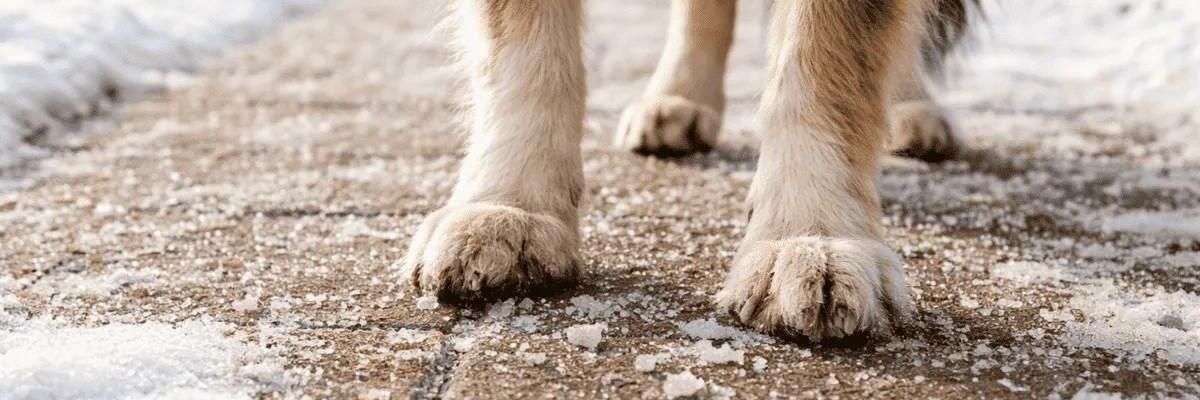
Winter walks can be enjoyable for dogs, but cold temperatures, ice and road de-icing products may affect their paws. Salt and chemical mixtures can irritate sensitive skin, while snow and ice may collect between the toes and make walking uncomfortable.
A simple winter paw-care routine helps reduce these risks. The most important steps are checking the paws, removing salt after walks and choosing suitable protection when needed.
Why do dogs' paws need extra care in winter?
A dog's paw pads are adapted to outdoor activity, but they are not immune to winter hazards.
The main risks include:
-
Road salt and de-icers: these products may irritate the skin and cause discomfort.
-
Cold temperatures: prolonged exposure can contribute to dry, cracked paw pads and frostbite.
-
Ice and frozen snow: sharp surfaces may cause small injuries.
-
Snow between the toes: compacted snow can form painful lumps and affect normal movement.
VCA Animal Hospitals highlights the risks of frostbite, cracked skin and chemical irritation from de-icing agents. Protective boots and careful paw checks are among the practical prevention measures.
Signs that your dog's paws may be irritated
Check all four paws after every winter walk. Look carefully at the pads and the skin between the toes.
Watch for:
-
frequent licking or chewing of the paws;
-
redness or visible irritation;
-
limping or repeatedly lifting a paw;
-
cracks, bleeding or swelling;
-
reluctance to walk;
-
ice or snow trapped between the toes.
Persistent limping, deep cracks, bleeding or significant pain require veterinary attention.
How to care for your dog's paws after a winter walk
1. Rinse the paws
Wash your dog's paws with lukewarm water after walks, especially when the route includes salted pavements. This helps remove salt, dirt and de-icing residues.
Avoid hot water, alcohol and household cleaning products. Gently dry the paws with a clean towel, including the spaces between the toes.
2. Use pet-specific paw-care products
A balm or paw wax formulated for dogs may help condition dry paw pads. Follow the product instructions and make sure it is suitable for your pet.
Remember that a balm is not a complete barrier against all chemicals. It does not replace rinsing and checking the paws after walks.
3. Consider dog boots
Protective boots can be useful for dogs walking regularly on salted roads, animals with sensitive paws or pets recovering from paw injuries.
Choose boots that:
-
fit the paw correctly;
-
do not squeeze the toes;
-
stay securely in place;
-
do not rub the skin;
-
allow natural movement.
Introduce boots gradually at home before using them outdoors.
4. Choose safer walking routes
Whenever possible, choose parks, snow-covered paths and routes with less exposure to road salt. During very cold weather, shorten walks if your dog shows signs of discomfort.
Puppies, senior dogs and short-coated breeds may need additional protection.
What should you avoid?
-
Do not pull frozen snow from the fur forcefully.
-
Do not apply human cosmetics with unknown ingredients.
-
Do not allow your dog to lick products that are not intended for pets.
-
Do not ignore repeated paw licking or limping.
-
Do not warm suspected frostbite with hot water or a hair dryer.
If you suspect frostbite, a chemical burn or a serious injury, contact your veterinarian.
Winter paw-care essentials
A practical winter routine may include a clean towel, pet-specific paw-care products and correctly fitted boots.
Explore Homyak's selection:
-
Dog boots - for additional protection on cold or treated surfaces.
-
Dog care products - choose products according to their intended use and ingredients.
Frequently Asked Questions
Should I wash my dog's paws after every winter walk?
It is advisable, especially after walking on salted pavements. Rinsing helps remove substances that may irritate the skin.
Can I use regular hand cream on my dog's paws?
It is better to use products formulated for pets. Dogs may lick substances applied to their paws, so product safety matters.
Does every dog need winter boots?
No. The need depends on the weather, walking surfaces, paw sensitivity and the dog's individual condition.
Why does my dog lick its paws after walking outside?
Possible causes include irritation from de-icers, injuries, allergies or a foreign object. Repeated licking should be discussed with a veterinarian.
What should I do if my dog's paw pads are cracked?
Avoid experimenting with human ointments. If the cracks are deep, painful or bleeding, arrange a veterinary examination.
Consistent paw checks and gentle cleaning can make winter walks safer and more comfortable for your dog.
This article is for informational purposes and does not replace veterinary advice.