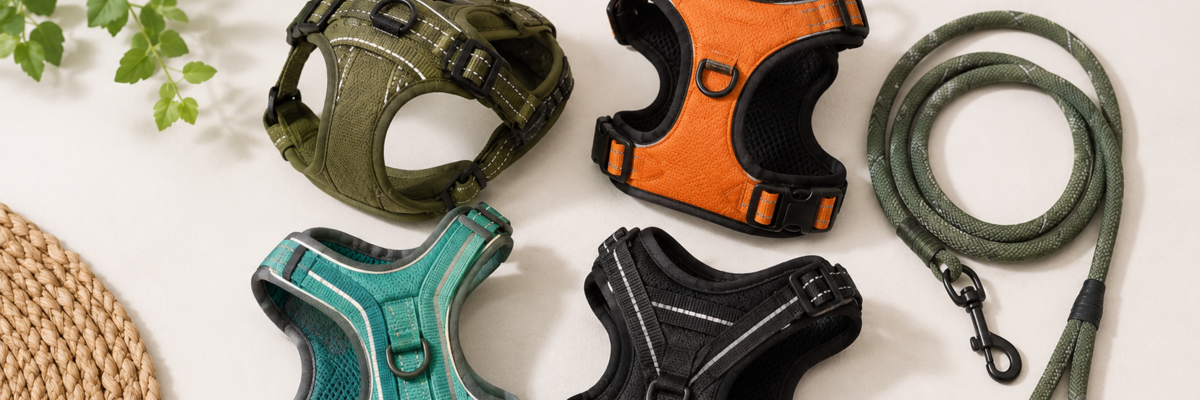
Daily walks are an essential part of every dog's life. They provide physical exercise, mental stimulation, and opportunities to explore the world. One of the most important accessories for enjoyable walks is a well-fitted dog harness. Unlike a traditional collar, a harness distributes pressure across the chest and shoulders, helping improve comfort while giving owners better control. With so many styles, materials, and designs available, choosing the right harness can seem overwhelming. Understanding the key differences will help you find the perfect option for your dog's size, breed, and activity level.
Why More Dog Owners Choose Harnesses
For many years, collars were the standard choice for walking dogs. Today, anatomical harnesses have become increasingly popular because they offer greater comfort and safety.
A properly fitted harness reduces pressure on the neck when a dog suddenly pulls or changes direction. This is especially important for puppies, energetic dogs, senior pets, and breeds with sensitive airways such as French Bulldogs, Pugs, and Boston Terriers.
A quality harness allows natural movement without restricting the shoulders or chest, making walks more enjoyable and reducing the risk of discomfort or injury.
Types of Dog Harnesses
There are several common types of harnesses, each designed for different situations.
Everyday Walking Harness
The most popular option for daily walks. Lightweight, comfortable, and suitable for most dog breeds.
Anatomical Harness
Designed to follow a dog's natural body shape while keeping pressure away from the neck and shoulders. This type is often recommended by veterinarians and professional dog trainers.
Harness with Handle
Ideal for large breeds, senior dogs, recovering pets, or situations where extra support and control are needed.
Sport Harness
Created for hiking, running, trekking, and other outdoor activities. These harnesses are made from durable yet lightweight materials that can withstand frequent use.
Front-Clip Training Harness
Features a leash attachment on the front of the chest. This design helps discourage pulling and makes leash training easier for many dogs.
Choosing the Right Size
Even the highest-quality harness will not perform well if it does not fit correctly.
Before purchasing, measure:
- Chest girth
- Lower neck circumference
- Body weight
- Back length if required by the manufacturer
After adjusting the straps, you should be able to fit two fingers comfortably between the harness and your dog's body. A harness that is too loose may allow the dog to slip out, while one that is too tight can cause rubbing and restrict movement.
Since sizing varies between brands, always check the manufacturer's size guide instead of relying only on labels such as Small, Medium, or Large.
Which Materials Are Best?
The material plays a major role in durability, comfort, and ease of maintenance.
Nylon is one of the most popular choices because it is lightweight, strong, weather-resistant, and easy to clean.
Harnesses with breathable mesh padding improve airflow during warm weather and help prevent rubbing on sensitive skin.
For powerful or highly active dogs, look for reinforced stitching, heavy-duty buckles, and stainless steel or aluminum hardware that can withstand repeated use.
Reflective stitching or reflective panels are also valuable features, making evening and early morning walks much safer.
What to Look for Before Buying
A modern dog harness should offer more than an attractive appearance. It should provide safety, comfort, and long-term durability.
Important features include:
- Ergonomic anatomical design
- Multiple adjustment points
- Strong buckles and metal hardware
- Breathable materials
- Reflective details
- Lightweight construction
- Soft padded straps
- High-quality stitching
Investing in a well-made harness usually means better comfort for your dog and a product that will last for years.
Common Mistakes Dog Owners Make
Many buyers focus mainly on color or price while overlooking more important features.
Common mistakes include:
- Buying a harness without measuring the dog
- Choosing the wrong size
- Leaving the straps too loose or too tight
- Selecting a model that does not match the dog's activity level
- Purchasing poor-quality hardware
- Continuing to use a worn or damaged harness
Before every walk, inspect the buckles, rings, stitching, and leash attachment point. Replacing a damaged harness early is far safer than risking equipment failure during a walk.
How to Care for a Dog Harness
Proper care helps extend the life of your harness and keeps it looking new.
After muddy or rainy walks, rinse the harness with warm water and allow it to air dry naturally. Mild detergent can be used for heavier dirt, but harsh cleaning chemicals should be avoided because they may damage the fabric or protective coating.
Do not dry the harness directly on a heater or in intense sunlight, as excessive heat can weaken both the fabric and plastic components.
Regularly check all straps, buckles, and metal rings for signs of wear. Replacing worn equipment before it fails is one of the simplest ways to keep every walk safe.
A properly fitted dog harness provides greater comfort, improved control, and enhanced safety during everyday walks. Choosing the right model means considering your dog's size, breed, age, and activity level rather than focusing only on appearance or price. A high-quality anatomical harness made from durable materials can serve your dog for many years while making every walk more enjoyable. By investing in the right harness, you are investing in your dog's health, confidence, and overall well-being.