Choosing the right cat litter is one of the most important decisions for every cat owner. The type of litter you use affects your pet's comfort, the cleanliness of your home, odor control, and the amount of time you spend cleaning the litter box. Today, pet stores offer a wide variety of cat litter products made from different materials, each with unique advantages and disadvantages. Understanding these differences will help you find the best option for your cat and your lifestyle.
Types of Cat Litter
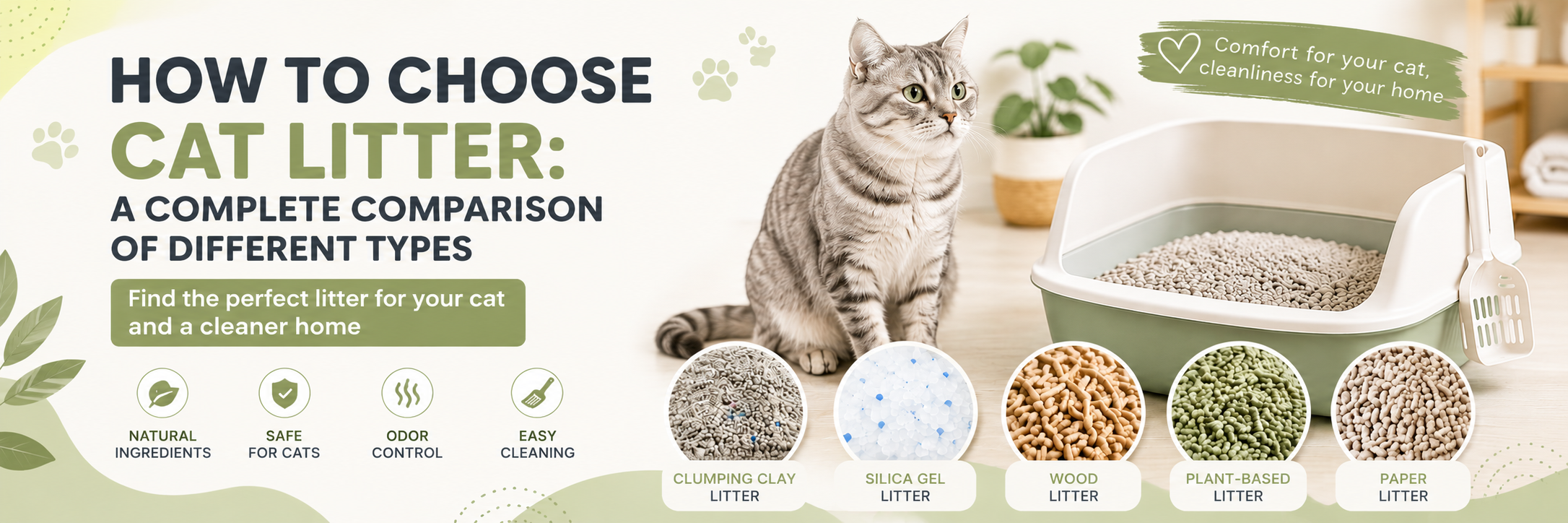
Modern cat litter generally falls into five main categories. Each type performs differently in terms of odor control, moisture absorption, maintenance, and environmental impact.
Clumping Clay Litter
Clumping clay litter is one of the most popular choices among cat owners. When it comes into contact with moisture, it forms solid clumps that can be easily removed with a litter scoop. This allows you to remove only the soiled litter instead of replacing the entire tray.
Advantages include:
- Excellent odor control
- Easy daily cleaning
- Cost-effective because only clumps are removed
- Familiar texture preferred by many cats
However, some inexpensive products may produce dust, and clay litter is generally heavier than other alternatives.
Bentonite Litter
Bentonite litter is a premium form of clay litter made from bentonite clay. It absorbs liquids quickly and creates firm clumps that simplify maintenance. Many veterinarians and experienced cat owners recommend bentonite litter for adult cats because it closely resembles the texture of natural soil.
Silica Gel Litter
Silica gel litter consists of highly absorbent crystals designed to trap moisture and odors efficiently. Compared to traditional litter, silica gel often lasts much longer before requiring a complete replacement.
Its main benefits include:
- Outstanding moisture absorption
- Excellent odor elimination
- Very low dust production
- Longer replacement intervals
Some cats may need time to adapt because the crystals create a slight crunching sound when stepped on. Introducing this litter gradually usually produces the best results.
Wood Pellet Litter
Wood litter is made from compressed sawdust without harsh chemical additives. When wet, the pellets naturally break down into soft wood fibers.
Many pet owners choose wood litter because it is made from renewable materials and is biodegradable. It is also commonly recommended for kittens and cats with sensitive respiratory systems.
On the downside, lightweight wood fibers can be tracked around the house, and the litter box may require more frequent cleaning.
Plant-Based Litter
Plant-based litter is manufactured from natural materials such as corn, wheat, soybeans, paper, or other renewable fibers. This category has become increasingly popular due to growing environmental awareness.
Many plant-based products are biodegradable, and some can be flushed in small quantities according to the manufacturer's instructions. Always check the product label before disposal.
How to Choose the Right Litter for Your Cat
Every cat has individual preferences. A litter that works perfectly for one pet may not be accepted by another.
Several factors should influence your decision:
- Your cat's age
- Coat length
- Paw sensitivity
- Allergy concerns
- Number of cats in the household
- Cleaning frequency
Kittens usually adapt well to wood or plant-based litter because these materials are considered safer if accidentally swallowed. Adult cats often prefer clumping litter because of its familiar texture.
Long-haired breeds may benefit from larger granules that are less likely to stick to the fur between their toes.
Important Features to Consider
Besides the material itself, there are several practical characteristics worth evaluating before purchasing cat litter.
Pay attention to:
- Odor control performance
- Moisture absorption speed
- Dust level
- Ease of scooping
- Overall cost efficiency
- Natural ingredients
- Safety for pets and people
- Disposal options
Granule size also plays an important role. Larger pellets are less likely to scatter outside the litter box, while finer litter often feels more natural to many cats.
Switching to a New Cat Litter
Cats usually dislike sudden changes. Replacing the litter overnight may cause your pet to avoid using the litter box altogether.
The best approach is a gradual transition. Start by mixing about 25% of the new litter with the current one. After several days, increase the amount to 50%, then 75%, and finally replace the old litter completely. Most cats adjust comfortably within one or two weeks.
If your cat refuses to use the litter box after the change, consider returning to the previous type or trying another material that better matches your pet's preferences.
Common Mistakes Cat Owners Make
Sometimes litter box problems are caused not by the litter itself but by improper maintenance.
Common mistakes include:
- Changing litter types too quickly
- Cleaning the litter box irregularly
- Using an insufficient layer of litter
- Choosing heavily scented products for sensitive cats
- Mixing several litter types without gradual adaptation
- Buying the cheapest product without considering quality
Even premium cat litter cannot prevent unpleasant odors if the litter box is not cleaned regularly. Cats are naturally clean animals and often refuse to use a dirty litter tray.
Selecting the right cat litter is essential for both your cat's well-being and your own comfort. The best choice depends on your pet's habits, health, and preferences, as well as your expectations regarding odor control, maintenance, and cost. Taking the time to compare different types of litter will help create a cleaner home and a more pleasant environment for everyone. A cat that willingly uses a clean litter box is usually a sign that you have found the right solution.