What is the best food for dogs? Can you mix dry and wet food? Is grain-free food really healthier? Should meat always be the first ingredient? Dog owners face dozens of questions when choosing the right diet for their pets.
We have collected answers to the most important questions about dog nutrition, based on recommendations from WSAVA, FEDIAF, AAFCO, FDA and CDC. This guide covers food selection, ingredients, feeding portions, popular nutrition trends and common feeding mistakes.
1. What Is the Best Dog Food?
The best dog food is one that meets the individual needs of the animal, taking into account its age, size, activity level and health condition. It should provide all essential nutrients and be well tolerated.
When choosing dog food, consider:
-
whether it is labelled as complete and balanced;
-
which life stage it is intended for;
-
whether its nutritional profile meets your dog's needs;
-
whether the manufacturer follows appropriate quality-control procedures;
-
whether nutritional information and calorie content are available.
WSAVA (World Small Animal Veterinary Association) recommends looking beyond the ingredient list and marketing claims. The manufacturer's expertise, production quality control and research into the finished product are also important.
2. Which Is Better for Dogs: Dry or Wet Food?
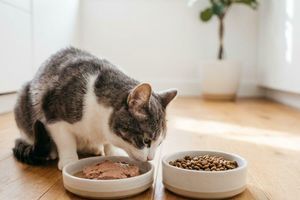
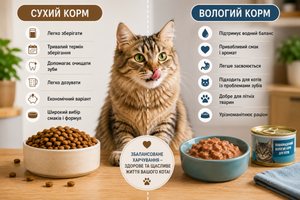
Both options can provide complete and balanced nutrition. There is no universally superior type of dog food.
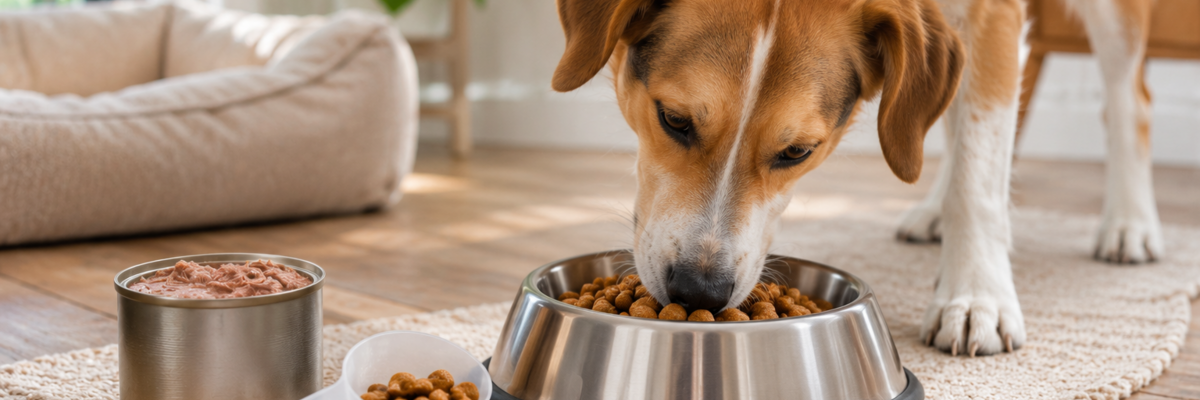
Dry food is convenient to store, measure and serve. Wet food contains more moisture and may be more appealing to dogs that are selective about food texture or aroma.
The right choice depends on your dog's needs, health, preferences, your budget and veterinary advice.
3. Can You Mix Dry and Wet Dog Food?
Yes. Mixed feeding is perfectly acceptable when both products are suitable for your dog and the total daily calorie intake is properly calculated.
For example, part of the daily diet can consist of dry kibble and the rest of complete wet food.
The important thing is not to add a full serving of canned food on top of the recommended daily amount of dry food. This can result in overfeeding and weight gain.
Also check whether both products are complete foods or whether one is intended only as a complementary food.
4. Is Grain-Free Dog Food Really Better?
No. Grain-free dog food is not automatically healthier than conventional food.
Rice, corn, oats and wheat can provide carbohydrates and other nutrients. The presence of grains does not mean that a food is of poor quality.
The FDA has investigated a possible association between certain diets and canine dilated cardiomyopathy (DCM), a disease affecting the heart muscle. Some reported diets contained high proportions of peas, lentils and other legumes among their main ingredients. However, the FDA has not established a definitive cause-and-effect relationship and continues to consider different contributing factors.
Therefore, do not choose grain-free food simply because the label is popular. If your dog has a suspected food allergy or medical condition, discuss dietary changes with your veterinarian.
5. How Much Protein Should Dog Food Contain?
There is no single protein percentage that is ideal for every dog.
Protein requirements depend on age, physiological condition, activity level and the energy content of the diet. The percentage of crude protein on the label is not the only important factor. Protein digestibility and amino acid composition also matter.
Puppies, adult dogs and animals with certain health conditions may have different nutritional requirements.
A higher protein percentage does not automatically make one food better than another.
6. Should Meat Be the First Ingredient in Dog Food?
The ingredient list provides information about the recipe, but it does not independently establish the nutritional quality of the finished product.
WSAVA points out that an ingredient list does not directly show ingredient quality, digestibility or the overall nutritional value of the food.
When choosing dog food, it is more important to check whether it is complete and balanced, what nutrients it provides and whether the manufacturer follows appropriate quality-control procedures.
7. What Is the Best Food for Puppies?
Puppies need complete food specifically formulated for growth. It must provide the nutrients required by a developing body.
When choosing puppy food, consider:
-
the dog's expected adult size;
-
the puppy's current age;
-
the energy content of the food;
-
calcium and phosphorus balance;
-
the manufacturer's feeding recommendations.
For large and giant-breed puppies, controlling growth rate and avoiding overfeeding are particularly important. Excessive energy intake and an inappropriate mineral balance can negatively affect skeletal development.
8. Does a Dog Need Special Food After Neutering or Spaying?
Not every neutered or spayed dog necessarily needs a special formula, but energy requirements may change after the procedure.
It is important to monitor body weight, food portions and physical activity. If your dog starts gaining weight, a veterinarian may recommend a diet with an appropriate calorie content.
Do not automatically switch to weight-management food without assessing your dog's body condition.
9. How Can You Tell If Your Dog Has a Food Allergy?
Food allergies can cause itching, recurring ear inflammation and skin problems. Some dogs may also experience digestive symptoms.
However, these signs do not prove that food is the cause. Other medical conditions can produce similar symptoms.
To diagnose a food allergy, a veterinarian may recommend an elimination diet using a suitable novel protein or hydrolysed diet, followed by a controlled food challenge.
Simply switching from one flavour of dog food to another is not a reliable way to diagnose an allergy.
10. Is Single-Protein Dog Food Good for Dogs?
Single-protein dog food contains one declared source of animal protein. Such diets can be useful as part of a properly supervised dietary trial.
However, the term "single-protein" does not automatically mean that a food is hypoallergenic. It is important to check the entire ingredient list, including fats, additives and other potential sources of protein.
If you suspect your dog has a food allergy, choose a suitable diet with veterinary guidance.
11. Is Raw BARF Feeding Safe for Dogs?
BARF feeding involves raw, unprocessed meat, organ meats, bones and other ingredients.
However, raw diets carry several risks:
-
possible contamination with Salmonella and other pathogens;
-
bacterial contamination of bowls and household surfaces;
-
an unbalanced supply of essential nutrients;
-
potential injuries or digestive tract complications caused by bones.
The CDC does not recommend raw pet food because of the risk of infection. The American Veterinary Medical Association (AVMA) also advises caution regarding raw or undercooked animal-source protein in pet diets.
If you are considering an alternative feeding approach, discuss its nutritional completeness and safety with a veterinary nutritionist.
12. Does Your Dog Need Probiotics and Prebiotics?
Probiotics are live microorganisms that may provide health benefits under certain conditions. Prebiotics are substances used by particular microorganisms in the digestive system.
Their effects depend on the specific strain, product formulation, dosage and the dog's health condition.
Not every healthy dog needs additional probiotics. If your pet has diarrhoea, chronic digestive problems or other symptoms, the underlying cause should be investigated with a veterinarian first.
13. How Much Food Should a Dog Eat Per Day?
The daily amount depends on body weight, age, activity level, health condition and the calorie content of the specific food.
The feeding chart on the packaging is a useful starting point. However, portions should be adjusted according to your dog's actual weight changes and body condition.
Best practices include:
-
measuring food with kitchen scales;
-
including all treats in the daily calorie allowance;
-
avoiding excessive calorie intake;
-
monitoring body weight regularly.
WSAVA recommends assessing body condition and muscle condition during veterinary examinations.
14. How Many Times a Day Should You Feed an Adult Dog?
Many adult dogs are fed once or twice a day. However, there is no single feeding schedule suitable for every animal.
Puppies generally need more frequent meals. Dogs with certain medical conditions may require a special feeding routine recommended by a veterinarian.
Consistency and control of the total daily food intake are important.
15. Why Is My Dog Refusing to Eat Its Food?
Possible reasons include a recent diet change, stress, an unfamiliar environment, dental problems, nausea or another health condition.
If your dog refuses food:
-
check whether the food is fresh;
-
consider whether the diet has recently changed;
-
observe your dog's behaviour and water intake;
-
do not force-feed your pet.
If food refusal is accompanied by vomiting, diarrhoea, weakness, pain or other symptoms, contact your veterinarian. Do not delay seeking advice for puppies, senior dogs or pets with chronic health conditions.
16. Can Dogs Eat Cat Food?
No, cat food should not be used as a dog's regular diet.
Cats and dogs have different nutritional requirements, so their complete foods have different nutrient profiles.
17. Can Dogs Eat Human Food?
Some human foods may be safe for dogs in small quantities, but they should not replace a complete and balanced diet.
Foods that are particularly dangerous include chocolate, grapes, raisins, onions, garlic, xylitol and alcohol.
Avoid giving dogs food containing spices, sauces, excessive salt or unknown ingredients.
18. How Should You Switch Your Dog to a New Food?
Unless there is a medical reason for an immediate dietary change, it is usually better to introduce new food gradually.
A common guideline is to transition over approximately seven days, gradually increasing the proportion of the new food. Some dogs may need more time.
If vomiting, diarrhoea or other significant symptoms develop, stop experimenting with the diet and consult your veterinarian.
19. Is It Okay to Change Dog Food Brands Regularly?
There is no need to change brands simply to provide variety if your dog tolerates its complete food well and maintains good health.
Every change requires consideration of the ingredients, nutritional completeness and calorie content. Frequent, unnecessary diet changes can also make it harder to identify the cause of adverse reactions.
20. How Should You Store Dry and Wet Dog Food?
Dry food should be stored in a cool, dry place, with the packaging tightly closed. Follow the manufacturer's instructions regarding temperature, humidity and the recommended period of use after opening.
Once opened, wet food should be stored according to the manufacturer's instructions, usually in a sealed container in the refrigerator.
Never use food from damaged packaging or products with an unusual smell or visible signs of spoilage.
Where Can You Buy Dry and Wet Dog Food?
At Homyak, you can explore different types of dog food and choose products according to your pet's age and nutritional needs.
-
Dry Dog Food - diets for puppies and adult dogs.
-
Wet Dog Food - canned food and portioned meals.
Before purchasing, check whether the product is labelled as complete, its intended life stage and the manufacturer's feeding recommendations.
Quick Guide: What Should Every Dog Owner Know About Dog Food?
-
Choose complete food that meets your dog's life-stage requirements.
-
Do not assume that grain-free or high-protein food is automatically better.
-
Dry and wet food can be combined when total calorie intake is properly calculated.
-
Avoid unnecessary changes to your dog's diet.
-
Do not use raw feeding without carefully assessing the risks.
-
Monitor food portions, body weight and body condition.
-
Consult a veterinarian if your dog develops symptoms of illness.
Proper nutrition is not about choosing the trendiest food. It is about meeting your dog's individual nutritional needs at every stage of life.
This article is for informational purposes only and does not replace an individual veterinary consultation.
Authoritative Veterinary and Nutritional Sources
-
WSAVA - Global Nutrition Guidelines: https://wsava.org/global-guidelines/global-nutrition-guidelines/
-
FEDIAF - Nutritional Guidelines 2025: https://europeanpetfood.org/self-regulation/nutritional-guidelines/
-
AAFCO - Understanding Pet Food Labels: https://aafco.org/consumers/understanding-pet-food/reading-labels/
-
FDA - Questions and Answers on Diet and Canine Heart Disease: https://www.fda.gov/animal-veterinary/animal-health-literacy/questions-answers-fdas-work-potential-causes-non-hereditary-dcm-dogs
-
CDC - Pet Food Safety: https://www.cdc.gov/healthy-pets/about/pet-food-safety.html
-
AVMA - Raw or Undercooked Animal-Source Protein in Cat and Dog Diets: https://avma.org/KB/Policies/Pages/Raw-or-Undercooked-Animal-Source-Protein-in-Cat-and-Dog-Diets.aspx