
What is the best food for cats? Can you feed your cat only dry food? Why are special diets often recommended for neutered cats? Is grain-free food really healthier? How much protein does a cat need, and why is taurine so important?
Cat nutrition has several unique characteristics. When choosing food, it is important to consider not only its flavour and ingredients but also your cat's specific nutritional requirements.
We have collected answers to 22 of the most common questions about cat food, based on recommendations from WSAVA, FEDIAF, AAFCO and information from Cornell University College of Veterinary Medicine.
1. What Is the Best Cat Food?
The best cat food is a complete and balanced diet that meets your cat's age, lifestyle, physiological condition and individual nutritional needs.
When choosing cat food, consider:
-
whether the product is labelled as complete food;
-
which life stage it is intended for;
-
its nutritional value and calorie content;
-
whether it provides essential amino acids, including taurine;
-
the manufacturer's quality-control procedures;
-
how well your cat tolerates the food.
WSAVA recommends evaluating more than just the ingredient list. The manufacturer's expertise, production controls and scientific research into the finished product are also important.
Your cat's health condition matters, too. A diet suitable for a healthy adult cat may not be appropriate for an animal with kidney disease, urinary tract problems or digestive disorders.
2. Which Is Better for Cats: Dry or Wet Food?
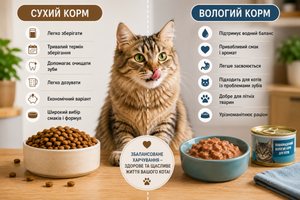
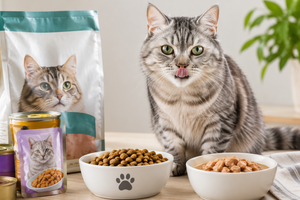
Both options can provide complete and balanced nutrition. The choice depends on your cat's needs and the characteristics of the specific product.
Dry cat food:
-
is convenient to measure and store;
-
contains less moisture;
-
generally has more calories per 100 grams;
-
is suitable for daily feeding when it is a complete food.
Wet cat food:
-
contains a significant amount of moisture;
-
can help increase overall water intake;
-
comes in different textures, including pâté, chunks in gravy and jelly;
-
requires proper storage after opening.
According to the Cornell Feline Health Center, wet food typically contains approximately 70-80% water, while dry food contains considerably less.
For cats that do not drink much water, wet food can be a useful way to increase their daily fluid intake.
3. Can You Mix Dry and Wet Cat Food?
Yes. Mixed feeding is acceptable when both products are suitable for your cat and the total daily calorie intake is appropriate.
For example, you can offer dry food at one meal and wet food at another.
The key is to calculate the total daily portion correctly. Do not give your cat the full recommended daily amount of dry food and then add an entire serving of wet food if this exceeds its calorie requirements.
Also check the product labels. Complementary food cannot automatically replace a complete diet.
4. Is Grain-Free Cat Food Really Better?
Not necessarily. The Grain Free label does not prove that a food is healthier or of higher quality than a diet containing grains.
Cats are obligate carnivores, but this does not mean that every plant-derived ingredient is automatically harmful. What matters is the overall nutritional composition, digestibility and suitability of the diet.
A grain-free diet may be appropriate in certain circumstances, but it is not necessary for every cat.
Choose food based on nutritional completeness rather than marketing claims on the packaging.
5. How Much Protein Does a Cat Need?
Cats have relatively high protein requirements compared with many other domestic animals because their metabolism is adapted to obtaining nutrients from animal-based foods.
Protein provides amino acids needed to maintain muscles, tissues, enzymes and other essential body functions.
However, choosing food solely because it has the highest protein percentage is not recommended.
Important factors include:
-
protein quality and digestibility;
-
amino acid composition;
-
overall nutritional completeness;
-
suitability for your cat's age and health condition.
Cats also require specific nutrients, including taurine, arginine and arachidonic acid.
6. Why Do Cats Need Taurine? Should It Be Included in Their Food?
Taurine is an essential amino acid for cats. Their bodies cannot produce enough of it to meet their needs, so it must be supplied regularly through their diet.
Taurine is important for:
-
normal heart muscle function;
-
retinal health and vision;
-
reproductive function;
-
healthy development in kittens.
A prolonged taurine deficiency can cause serious health problems, including dilated cardiomyopathy and retinal degeneration.
This is why complete cat foods must provide an adequate amount of taurine.
Do not automatically add taurine supplements to a complete diet unless there is a specific need and your veterinarian recommends it.
7. What Is the Best Food for Kittens?
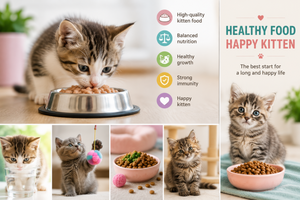
Kittens need complete food specifically formulated for growth. During development, their bodies require sufficient energy, protein, fats, minerals and vitamins.
When choosing kitten food, look for:
-
a Kitten or Growth label;
-
suitability for your kitten's age;
-
nutritional completeness;
-
an adequate taurine content;
-
clear feeding recommendations.
Do not use ordinary adult cat food as a kitten's permanent diet unless the product is specifically labelled as suitable for growth or all life stages.
8. Does a Neutered or Spayed Cat Need Special Food?
After neutering or spaying, a cat's energy requirements may change. If food intake remains the same while activity decreases, the animal may gradually gain weight.
Food formulated for neutered cats often has an adjusted calorie content and nutritional profile.
However, being neutered does not automatically mean that every cat must eat one particular type of food.
It is important to monitor:
-
body weight;
-
portion sizes;
-
physical activity;
-
overall health.
If your cat starts gaining weight, a veterinarian can help select an appropriate diet.
9. Can a Neutered Cat Eat Regular Adult Cat Food?
Yes, provided that the food is complete and balanced and meets the cat's age and energy requirements.
However, if your cat starts gaining weight after neutering, you may need to reconsider its calorie intake and daily portions.
Special food for neutered cats can be a convenient option, but it does not replace portion control.
10. How Can You Tell If Your Cat Has a Food Allergy?
Food allergies in cats may cause:
-
persistent itching;
-
excessive grooming;
-
skin redness;
-
hair loss;
-
recurring ear inflammation;
-
vomiting or diarrhoea.
These symptoms are not specific to food allergies. Other medical conditions can cause similar problems.
To diagnose a food allergy, a veterinarian may recommend an elimination diet using a hydrolysed diet or an appropriate novel protein source. After the dietary trial, a controlled reintroduction of the previous ingredient may be used to confirm the reaction.
Simply switching between different food flavours is not a reliable way to diagnose an allergy.
11. Is Single-Protein Cat Food Good for Cats With Allergies?
Single-protein food contains one declared source of animal protein. It may be used as part of a dietary trial when recommended by a veterinarian.
However, this type of food is not automatically hypoallergenic. Other protein-containing ingredients may still be present and need to be considered.
When diagnosing a food allergy, the full ingredient list, the cat's previous diet and a properly supervised elimination diet are all important.
12. Does Your Cat Need Special Urinary Care Food?
Not every cat needs food labelled Urinary.
These diets are formulated for particular urinary health needs and specific veterinary indications.
It is important to distinguish between general preventive nutrition and therapeutic veterinary diets. Diets intended to dissolve certain types of urinary crystals or stones should only be used according to a veterinary diagnosis and treatment plan.
The Cornell Feline Health Center explains that lower urinary tract diseases can have different causes. There is no single universal food that treats every urinary problem.
Important: If your cat repeatedly visits the litter box, strains, cries or cannot pass urine, this may indicate a urethral obstruction. This is a medical emergency, particularly in male cats.
13. Can Wet Food Help Prevent Kidney and Urinary Tract Problems?
Wet food increases the amount of water a cat receives through its diet. This may help increase total fluid intake and urine volume.
However, it would be incorrect to claim that wet food alone guarantees protection against kidney or urinary tract diseases.
Prevention and management depend on several factors, including age, health, genetics, nutrition and water intake.
Cats with diagnosed medical conditions need an individual dietary plan recommended by a veterinarian.
14. Why Does My Cat Drink So Little Water? Should I Give More Wet Food?
Cats can obtain a significant proportion of their daily water requirements from food. This is why cats that regularly eat wet food may drink less from their water bowls.
According to the Cornell Feline Health Center, wet food generally contains approximately 70-80% water, whereas dry food has a much lower moisture content.
To make drinking easier:
-
place several water bowls in different locations;
-
replace the water regularly;
-
choose wide, comfortable bowls;
-
try a drinking fountain if your cat is interested in moving water;
-
discuss increasing the proportion of wet food with your veterinarian if necessary.
A sudden decrease in water intake, especially when accompanied by lethargy, vomiting or loss of appetite, requires veterinary attention.
15. How Much Food Should a Cat Eat Per Day?
The daily amount depends on:
-
body weight;
-
age;
-
activity level;
-
neutering status;
-
physiological condition;
-
the calorie content of the food.
Start with the manufacturer's feeding recommendations, but do not treat them as an exact requirement for every cat.
A less active cat may need fewer calories than an active cat of the same weight.
It is best to weigh food using kitchen scales, include treats in the daily calorie allowance and monitor your cat's body condition regularly.
16. How Many Times a Day Should You Feed a Cat?
Feeding frequency depends on age and health.
According to the Cornell Feline Health Center:
-
kittens up to six months old generally benefit from three meals a day;
-
cats between six months and one year can often be fed twice daily;
-
adult cats are commonly fed once or twice a day.
These are general guidelines. Cats with certain medical conditions may need a different feeding schedule recommended by a veterinarian.
17. Can You Leave Dry Food Out for Your Cat All Day?
Yes. Some cats can manage free-choice dry feeding without problems. However, for others, unlimited access to food increases the risk of overeating.
If your cat tends to gain weight, it is better to measure the daily portion and divide it into several meals.
You can also use automatic feeders or interactive puzzle feeders.
The important thing is to monitor not only the amount of food but also the total daily calorie intake.
18. Can You Feed Your Cat a Homemade Diet?
Yes, but a homemade diet must be nutritionally complete and properly balanced.
Cats have specific nutritional requirements for taurine, arachidonic acid, vitamins and other essential nutrients. Meat, organ meats and grains alone do not guarantee that all these requirements will be met.
An incorrectly formulated homemade diet can cause nutritional deficiencies or excesses and lead to serious health problems.
If you want to feed your cat homemade food, the recipe should be developed by a veterinary nutritionist.
19. Is Raw BARF Feeding Safe for Cats?
Raw feeding involves offering uncooked meat, organ meats, bones and other ingredients.
However, raw diets carry several risks:
-
contamination with Salmonella and other bacteria;
-
contamination of kitchen surfaces and food bowls;
-
possible parasitic infections;
-
nutritional deficiencies or excesses;
-
digestive tract injuries caused by bones.
The CDC does not recommend raw pet food because of the risk of foodborne infections. Cornell University also notes that there is insufficient convincing evidence that raw diets provide superior health benefits for cats.
20. Do Cats Need Probiotics and Prebiotics?
Probiotics are live microorganisms that may provide health benefits under certain conditions.
Prebiotics are substances used by certain microorganisms in the digestive system.
Their use may be appropriate in specific situations, but not every healthy cat needs additional supplements.
The effect depends on the specific strain, product formulation and the animal's health condition.
If your cat has persistent diarrhoea, vomiting or other digestive problems, the underlying cause should first be investigated with a veterinarian.
21. Why Is My Cat Refusing to Eat?
There can be many reasons:
-
a recent change in food;
-
stress or changes in the environment;
-
an unfamiliar food texture or smell;
-
dental problems;
-
nausea;
-
digestive disorders or other illnesses.
If your cat suddenly stops eating, do not simply buy another food and wait to see what happens.
Prolonged food refusal is particularly dangerous for cats because it can lead to hepatic lipidosis, a serious liver condition.
Cats that are overweight require particular attention. If your cat stops eating, loses weight or develops other symptoms, contact your veterinarian without delay.
22. Can Cats Drink Milk and Eat Human Food?
Ordinary cow's milk is not a necessary part of an adult cat's diet. Many cats have reduced ability to digest lactose, so milk can cause diarrhoea and digestive discomfort.
You should also avoid feeding cats human foods containing:
-
onions and garlic;
-
chocolate;
-
alcohol;
-
caffeine;
-
xylitol;
-
excessive salt and spices.
Treats should never replace complete and balanced food. WSAVA recommends limiting treats and other additional foods to approximately 10% of a cat's daily calorie intake to help maintain nutritional balance.
Where Can You Buy Dry and Wet Cat Food?
Homyak offers different types of cat food for kittens and adult cats.
Explore the available categories:
-
Dry Cat Food - diets for adult cats, neutered cats and pets with different nutritional needs.
-
Wet Cat Food - pâtés, chunks in gravy and jelly.
You can also explore specific products:
-
Brit Premium Sterilized with Chicken, 1.5 kg - dry food formulated for adult neutered cats.
-
Brit Care Cat Pouch with Duck, 85 g - wet food for adult cats.
These are examples of different feeding formats, not universal recommendations for every cat. Before purchasing, check the intended life stage, nutritional completeness and product ingredients.
Quick Guide: What Should You Know About Cat Nutrition?
-
Cats are obligate carnivores with specific nutritional requirements.
-
Choose complete food according to your cat's age and health condition.
-
Dry and wet food can be combined when total calorie intake is controlled.
-
Taurine must be supplied through the diet.
-
Grain-free food is not automatically better.
-
Monitor weight and portion sizes in neutered cats.
-
Wet food can help increase water intake.
-
Do not use therapeutic diets without veterinary advice.
-
Raw diets carry nutritional and infectious risks.
-
Prolonged refusal to eat requires veterinary attention.
Proper nutrition helps support your cat's health, activity and overall wellbeing. The goal is not simply to choose a popular brand, but to find a diet that meets your pet's individual nutritional needs.
This article is for informational purposes only and does not replace veterinary advice or an individual veterinary consultation.
Authoritative Veterinary and Scientific Sources
-
Cornell University College of Veterinary Medicine - Feeding Your Cat: https://www.vet.cornell.edu/departments-centers-and-institutes/cornell-feline-health-center/health-information/feline-health-topics/feeding-your-cat
-
Cornell University - How Often Should You Feed Your Cat?: https://www.vet.cornell.edu/departments/cornell-feline-health-center/health-information/feline-health-topics/how-often-should-you-feed-your-cat
-
Cornell University - Feline Lower Urinary Tract Disease: https://www.vet.cornell.edu/departments-centers-and-institutes/cornell-feline-health-center/health-information/feline-health-topics/feline-lower-urinary-tract-disease
-
WSAVA - Global Nutrition Guidelines: https://wsava.org/global-guidelines/global-nutrition-guidelines/
-
FEDIAF - Nutritional Guidelines for Cats and Dogs: https://europeanpetfood.org/self-regulation/nutritional-guidelines/
-
AAFCO - Understanding Pet Food Labels: https://aafco.org/consumers/understanding-pet-food/reading-labels/
-
CDC - Pet Food Safety: https://www.cdc.gov/healthy-pets/about/pet-food-safety.html
-
Cornell University - Obesity in Cats: https://www.vet.cornell.edu/departments-centers-and-institutes/cornell-feline-health-center/health-information/feline-health-topics/obesity