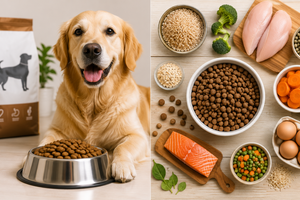

Choosing the “best” food for a pet often turns into a search for the highest meat content, the most impressive ingredient list, or the most attractive claims on the packaging. Veterinary nutrition takes a different approach.
According to recommendations from the American Animal Hospital Association (AAHA) and the World Small Animal Veterinary Association (WSAVA), a diet should primarily be assessed for nutritional completeness, nutrient profile, calorie content, and suitability for the individual animal. Nutrition is part of a broader plan for maintaining health, not simply a way to provide food.
Where to start when choosing pet food
The first step is to assess the animal, not the food.
Veterinarians consider the animal's species, age, physiological condition, activity level, body weight, body condition, muscle condition, and any existing health problems. These factors determine which nutrients and how much energy an individual dog or cat needs.
For a healthy animal with an appropriate body weight, there is usually no need to constantly change its diet simply because a new product has appeared on the market. If the food is complete and balanced, appropriate for the animal's life stage, and well tolerated, frequent changes may be unnecessary.
What does “complete and balanced” mean?
One of the most important characteristics of pet food is nutritional completeness.
Complete and balanced food is formulated to provide the essential nutrients an animal needs when fed according to the manufacturer's instructions. The FDA explains that owners should look for an appropriate nutritional adequacy statement on the label, such as compliance with an established nutrient profile or successful completion of appropriate feeding trials.
This is much more important than individual marketing claims such as “premium,” “holistic,” or “natural.” WSAVA specifically points out that some marketing terms have limited practical value when assessing the nutritional quality of pet food.
Does the first ingredient determine food quality?
This is one of the most common myths about pet food.
Ingredients are generally listed in descending order of weight before processing. However, fresh ingredients contain a significant amount of water, so their position on the ingredient list does not directly indicate their nutritional contribution after processing.
Therefore, the rule “the higher meat appears on the ingredient list, the better the food” is an oversimplification.
WSAVA recommends that pet owners should not assess food quality based solely on the ingredient list. Nutritional adequacy, quality control, research, and information provided by the manufacturer are more important factors.
What should you look for on the label?
A pet food label can provide valuable information if you know what to look for.
Pay attention to:
- The species the food is intended for
- The life stage - growth, adult maintenance, etc.
- The nutritional adequacy statement
- Calorie content
- Guaranteed analysis
- Feeding recommendations
- Manufacturer and contact information
- Storage instructions
- Expiration or best-before information
WSAVA also recommends considering whether the manufacturer can provide information about qualified nutritionists, quality-control procedures, and research supporting the product. Scientific publications in peer-reviewed journals can provide additional evidence that a company takes nutritional formulation seriously.
Protein: more does not always mean better
A high protein percentage is often used in pet food marketing as a sign of quality. However, this figure alone does not determine whether a particular diet is appropriate for an animal.
Protein requirements depend on the species, age, physiological condition, activity level, and health status. A kitten and an adult cat, or a puppy and a senior dog, may have different nutritional requirements.
The quality of a protein source also involves its amino acid profile and overall nutritional value.
Therefore, choosing food simply because “this one contains 35% protein, so it must be better” is not scientifically justified.
Dry or wet food: what do veterinarians recommend?
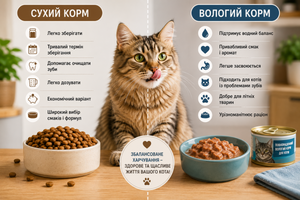
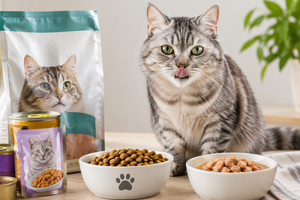
From a nutritional perspective, both high-quality dry and wet foods can be part of a complete diet.
The choice depends on the individual animal, its preferences, feeding routine, health status, and the owner's practical circumstances.
Wet food contains considerably more water than dry food, which can be a useful feature of the diet. Dry food, meanwhile, generally contains more energy per unit of weight.
For this reason, comparing something like 10% protein in wet food with 30% protein in dry food without considering moisture content can be misleading. The FDA explains that foods with different moisture levels should be compared on a dry-matter basis when evaluating nutrient concentrations.
The most important thing: avoid overfeeding
Even high-quality food can contribute to health problems if an animal consumes too many calories.
AAHA recommends assessing not only body weight but also body condition and muscle condition. A number on the scale alone does not always provide a complete picture of nutritional status.
When calculating the daily diet, remember to include treats, additional foods, and food used to administer medications.
For healthy dogs and cats, AAHA recommends that the main complete and balanced diet account for at least 90% of total food intake, while treats and other extras should account for no more than 10%.
Food for puppies, kittens, and adult animals
Age matters.
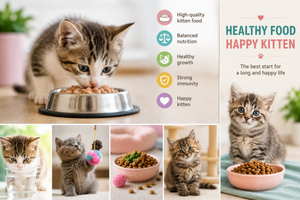
Puppies and kittens need food formulated for growth. Their energy and nutrient requirements differ from those of fully grown animals.
According to AAHA recommendations, growth diets are generally used until around one year of age for cats and for small and medium-sized dogs. Large and giant breeds may continue skeletal development for longer, approximately until 15–16 months. For these dogs, controlling growth rate and avoiding excessive calcium intake are particularly important.
Does a neutered or spayed pet need special food?
Neutering or spaying does not automatically mean that every animal requires a specific therapeutic diet.
After sterilization, energy requirements and the risk of weight gain can change. Therefore, calorie intake, portion size, and body condition should be monitored.
If an animal starts gaining excess weight, a veterinarian may recommend adjusting the amount of food or choosing a diet with an appropriate energy density.
When is veterinary therapeutic food necessary?
Veterinary therapeutic diets are not simply “higher-quality” pet foods. They are formulated for specific medical purposes.
Certain kidney, urinary, gastrointestinal, and weight-management conditions may require specially formulated diets.
AAHA recommends performing an individual nutritional assessment and selecting a diet according to the animal's specific health needs.
For this reason, therapeutic food should not be selected solely from the product description. Its use should preferably be discussed with a veterinarian.
Is grain-free food really better?
There is no general rule that grain-free food is automatically healthier or better.
Grains themselves do not make a complete and balanced pet food unhealthy. What matters is the nutritional profile of the entire diet.
If an animal does not have a confirmed reaction to a particular ingredient, there is generally no scientific reason to eliminate that ingredient simply because grain-free diets are popular.
What about homemade or raw diets?
A homemade diet may appear simple and natural, but formulating a nutritionally complete diet is difficult without specialist knowledge.
AAHA notes that studies evaluating homemade diet recipes, including recipes published by veterinarians, have found that many do not provide complete and balanced nutrition. For homemade diets, the association recommends consulting a board-certified veterinary nutritionist or another appropriately qualified veterinary nutrition professional.
Therefore, “natural” does not automatically mean “nutritionally complete.”
How can you tell whether a food suits your pet?
A diet should not be evaluated solely by looking at the packaging.
Regularly monitor:
- Body weight and body condition
- Muscle condition
- Appetite
- Skin and coat condition
- Digestion
- Activity level
- Overall well-being
If your pet develops persistent digestive problems, itching, unexplained weight changes, loss of appetite, or other symptoms after changing food, it is better not to keep switching between brands. Consult a veterinarian instead.
How should you change your pet's food?
A sudden dietary change can cause digestive upset.
AAHA recommends introducing a new diet gradually. Its guidelines indicate that transitioning over approximately 4–7 days can help reduce the risk of gastrointestinal problems in healthy animals.
If your pet has a sensitive digestive system or has previously reacted badly to dietary changes, a slower transition may be more appropriate.
Conclusion: what makes a good pet food?
Good pet food is not necessarily the product with the highest meat content, the highest protein percentage, or the largest number of fashionable claims on the package.
From the perspective of evidence-based veterinary nutrition, a good diet should:
- Be complete and balanced
- Be appropriate for the animal's species and life stage
- Provide an appropriate amount of energy
- Match the animal's health requirements
- Be produced under appropriate quality-control standards
- Provide transparent nutritional information
- Be well tolerated by the individual animal
This approach is consistent with recommendations from veterinary organizations. WSAVA emphasizes evaluating nutritional information, manufacturing standards, quality control, and research rather than relying on marketing claims. AAHA, meanwhile, considers nutrition an individualized component of veterinary care.
The best food for your pet, therefore, is not necessarily the one that looks most impressive in advertising. It is the diet that meets the animal's physiological needs, provides complete nutrition, and helps maintain a healthy body condition and overall well-being.